Blog / Learning Rust on the Robot / Ep. 1
episode 1
The line I couldn't give back
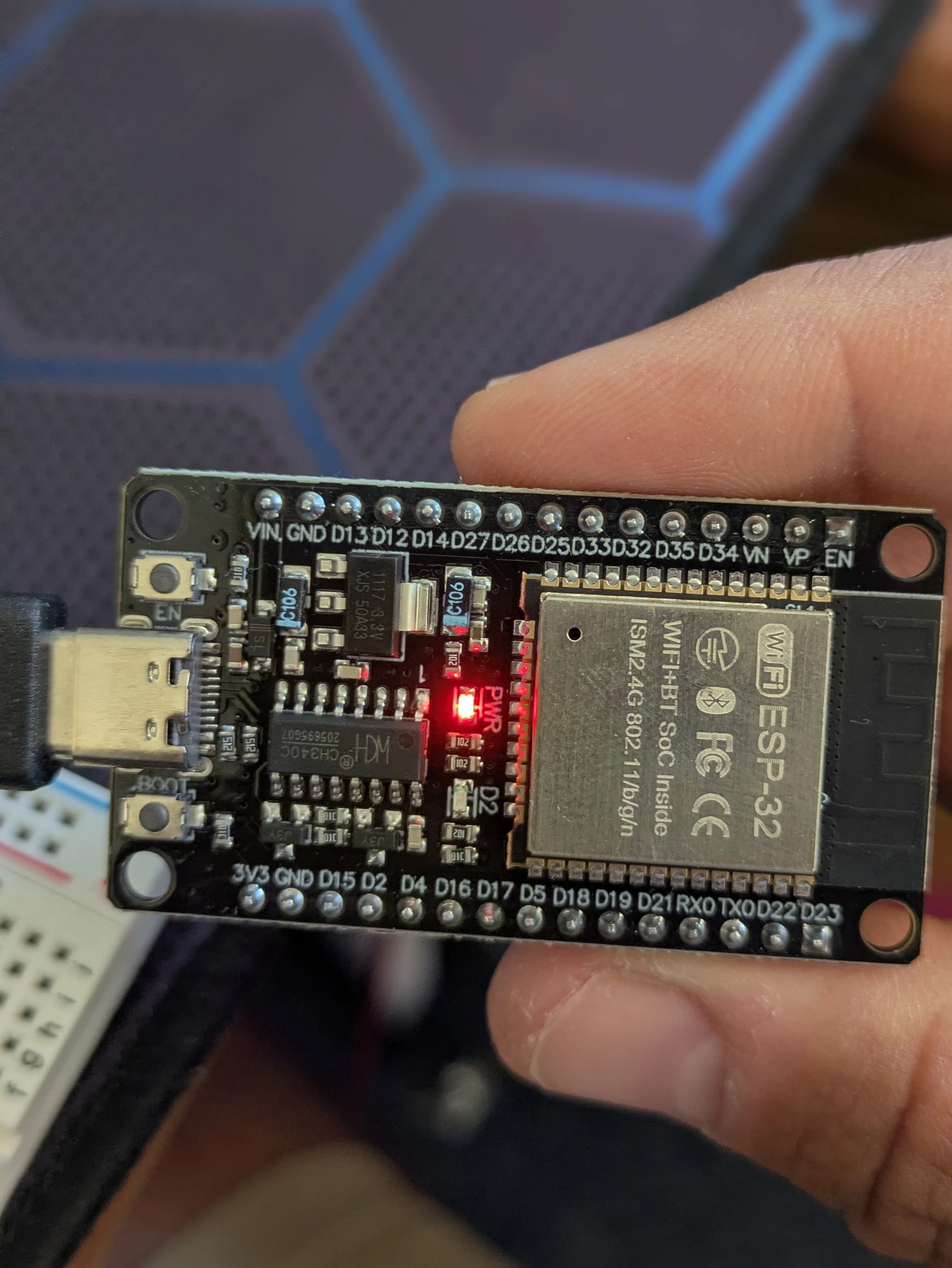
A word on what this serial is, since it’s the first one. I’m not new to Rust — I’ve written a fair bit, worked through the book, shipped a few small things. But always at arm’s length: String everywhere, a .clone() whenever the borrow checker grumbled, an .unwrap() to make the red squiggle go away. What I’ve never done is understand it properly — earn the ownership model instead of talking my way around it, work without the standard library, feel why the rules bite where they do. So I’m porting the Neato’s ESP32 firmware — currently known-good C++ — to bare-metal no_std Rust, on the real hardware, as an excuse to go deep. Same behaviour, rebuilt the hard way on purpose, so the concepts actually land instead of sliding off. This is episode one, and it’s already taught me something I thought I understood.
The C++ firmware already does this. It reads a byte, stashes it, and when it sees a newline it hands you the whole line to parse. Fifteen lines, no drama. I sat down to write the same thing in Rust — a feed function on a little LineReader — and got stuck on something so small I was almost embarrassed to admit it: I couldn’t work out how to give the finished line back.
Here’s the shape. On each byte, if it’s a \n the line is done, so I return it and empty the buffer for the next one. My first instinct:
b'\n' => {
    self.buf.clear();
    Some(self.buf.as_str())   // ...returns an empty string. Genius.
}
Obviously wrong once you say it out loud — I clear it, then hand back the nothing that’s left. Fine, flip the order:
let line = self.buf.as_str();  // borrow the buffer
self.buf.clear();              // now mutate it — NO.
Some(line)
And this is where Rust stops being C++ with different punctuation. line is a reference into self.buf. clear() wants to mutate self.buf. You cannot mutate a thing while a live reference into it is still hanging around — the borrow checker won’t have it. In C++ nobody would stop me; I’d get a dangling view into a buffer I just wiped and find out at 2am. Rust just… refuses. The error is the feature.
The fix took a minute to see and then felt obvious. Don’t clear on the way out — clear on the way in. I added a complete flag. When I hit the newline I set the flag and return the buffer as-is, borrow intact, nothing mutated. Then at the very top of the next feed, before touching anything, I check the flag and wipe the buffer then. The clear and the return never happen in the same breath, so there’s no borrow to conflict with:
if self.complete {
    self.buf.clear();
    self.complete = false;
}
Compiled. And here’s the thing I keep relearning: the borrow checker wasn’t being pedantic, it was pointing at a real lifetime problem I’d have shipped without noticing.
So feed was done. And I wanted to prove it — a couple of tiny tests, feed it "F 180\n", check I get "F 180" back; feed a \r in the middle, check it’s ignored; feed two lines, check the first doesn’t bleed into the second. That’s when I hit the second wall.
cargo test didn’t run. This whole crate is built for the ESP32 — a no_std, Xtensa target my Mac physically can’t execute. And worse, the crate pulls in esp-hal, the hardware layer, which won’t even compile for a laptop. You can’t test firmware by pretending your MacBook is a microcontroller.
The escape was to notice that feed doesn’t know anything about the chip. Neither does the command parser. They’re pure logic — bytes in, text out — leaning on nothing but heapless. So I pulled those two files out into their own little crate, protocol, that has no hardware dependencies at all. Plain Rust. Builds anywhere. The firmware now depends on it; the motor code, which does touch pins, stayed behind.
One trap on the way: I first tucked protocol inside the firmware folder, and the tests still tried to build for the chip. Turns out the firmware carries a hidden .cargo/config that forces the Xtensa target on everything beneath it. Anything nested inside inherits it. Moving protocol to sit beside the firmware instead of under it fixed it instantly — out of the folder, out from under the config.
Then:
running 4 tests
test serial::tests::buffer_resets_between_lines ... ok
test serial::tests::carriage_return_is_ignored ... ok
test serial::tests::returns_none_until_newline ... ok
test serial::tests::yields_whole_line_on_newline ... ok
Four green, running on my Mac in a hundredth of a second, no board plugged in. The one I care about most is buffer_resets_between_lines — it’s the test that would’ve caught the borrow bug’s evil twin, one line leaking into the next.
None of this has touched real hardware yet — it compiles for the chip and the logic is tested on the host, which is not the same as “works on the robot.” That green light is still owed. Next is the command parser: turning "F 180" into a real typed Command, an enum and a match, which everyone tells me is the part where Rust starts to feel good. After that, the boss fight I keep circling — LEDC, PWM, and actually driving the DRV8871.